Best Kitchen Styles for Homes in Kent
The best kitchen styles for a kitchen remodel in Kent are transitional, modern farmhouse, shaker based traditional and contemporary. These four styles consistently work well with Kent’s housing stock, which is dominated by ramblers, split levels and builder grade homes from the 1970s through the 1990s, along with newer construction spreading across East Hill. This guide breaks down each style, what it takes to bring it into a Kent home and which one fits your house best.
Table of Contents
- Best Kitchen Styles for Kent Homes
- Transitional Kitchens
- Modern Farmhouse Kitchens
- Shaker Traditional Kitchens
- Contemporary and Modern Minimalist Kitchens
- Kitchen Styles Compared
- Matching Style to Kent’s Housing Stock
- Choosing the Right Style for Your Kitchen Remodel in Kent
- Common Questions
Best Kitchen Styles for Kent Homes
Kent’s housing stock has a median build year of around 1985, with ramblers, split levels and tract homes concentrated in neighborhoods like East Hill, Scenic Hill and West Hill. A smaller pocket of older Victorian and Colonial influenced homes sits closer to downtown Kent. This mix of home ages and floor plans is exactly why certain kitchen styles perform better here than others.
- Transitional — blends traditional cabinetry with modern finishes, fits nearly any home age
- Modern farmhouse — warm and casual, suits ramblers and split levels well
- Shaker traditional — clean and classic, works in both older and newer homes
- Contemporary or modern minimalist — sleek and streamlined, fits newer East Hill construction
Transitional Kitchens
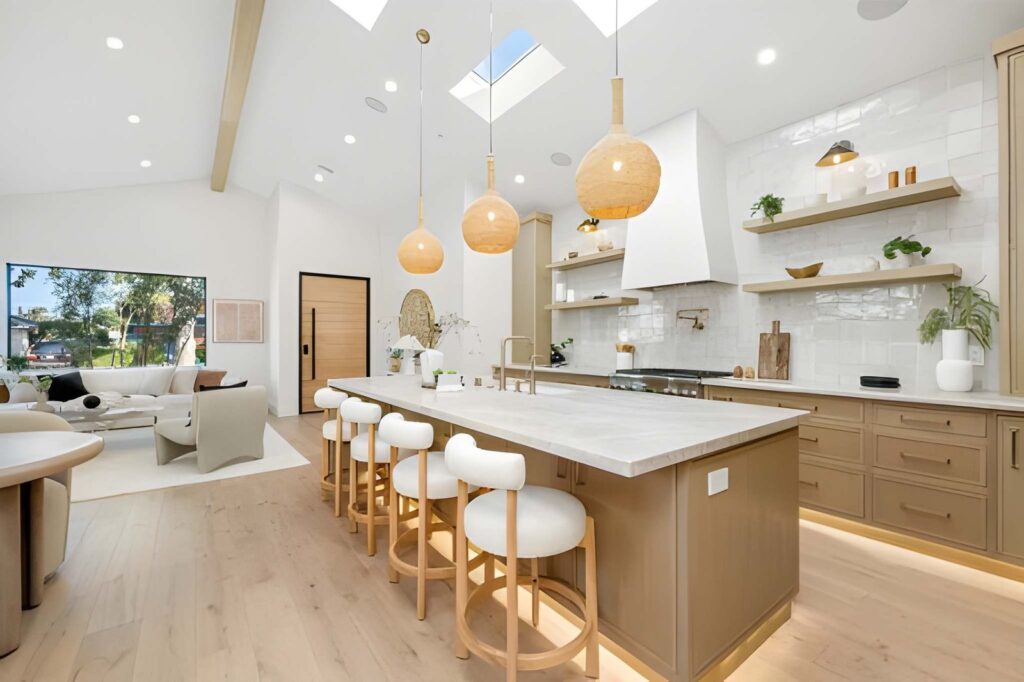
A transitional kitchen combines classic cabinet shapes with modern hardware, lighting and appliances and it is currently the most requested kitchen style nationally. According to the NKBA’s 2026 Kitchen Trends Report, 72 percent of industry respondents named transitional the most popular style expected over the next three years and the 2025 Houzz Kitchen Trends Study found it was already the top choice among homeowners actively renovating, ahead of traditional, modern and farmhouse.
Why Transitional Works in Kent
Transitional design does not require a specific architectural style to work, which makes it a safe fit for Kent’s mixed housing stock. A rambler from 1978 and a newer East Hill build can both carry a transitional kitchen convincingly, since the style leans on cabinetry and finishes rather than the bones of the house. This flexibility is a big part of why it holds up so well at resale across different home types.
Materials and Colors
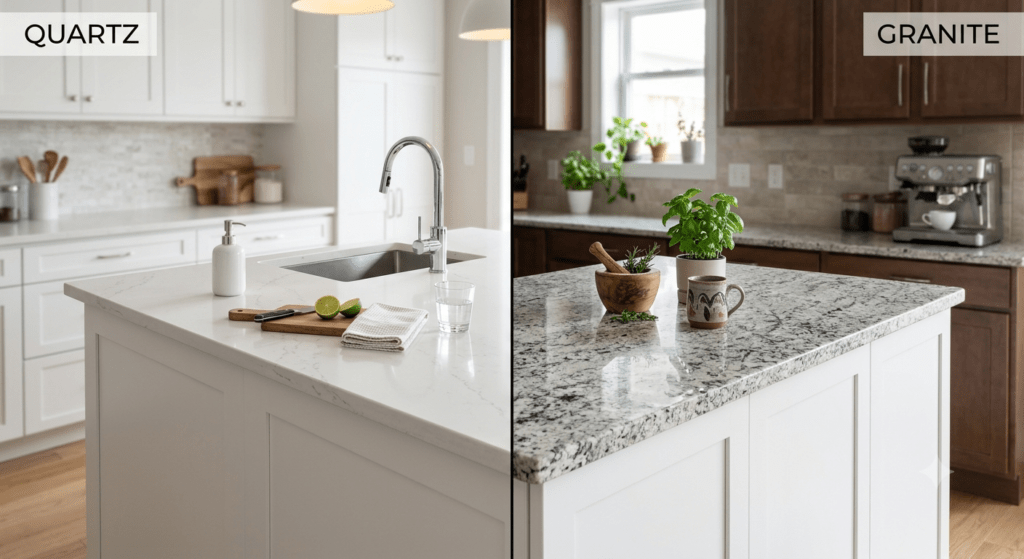
Transitional kitchens typically use shaker or beadboard style cabinets paired with clean lined hardware, stainless or panel ready appliances and neutral colors with more depth than the flat white finishes popular a decade ago. Quartz and natural quartzite are the leading countertop choices and white oak has become the most requested wood tone for cabinetry and flooring according to the same NKBA report.
Cost Considerations for a Transitional Remodel
Because transitional design does not require custom or specialty cabinetry, it generally lands in the mid-range cost tier rather than the high end. Homeowners can achieve the look with stock or semi-custom cabinets, which keeps the budget more predictable than a fully custom kitchen while still delivering a current, resale friendly result.
Modern Farmhouse Kitchens
A modern farmhouse kitchen pairs warm wood tones, shaker cabinets and simple hardware with a more casual, lived in feel than a strict traditional kitchen. While national farmhouse demand has softened somewhat, dropping to around 10 percent of style preference in the 2026 Houzz data, it remains a strong fit for specific home types rather than a universal choice.
Why Modern Farmhouse Fits Kent’s Ramblers and Split Levels
Kent’s ramblers and split level homes, common throughout West Hill and the older sections of East Hill, tend to have open sightlines between the kitchen and living space, along with more casual, family oriented layouts. A modern farmhouse kitchen suits this kind of layout better than a strict formal style, since it leans into warmth and everyday function rather than polish.
Key Elements of a Modern Farmhouse Kitchen
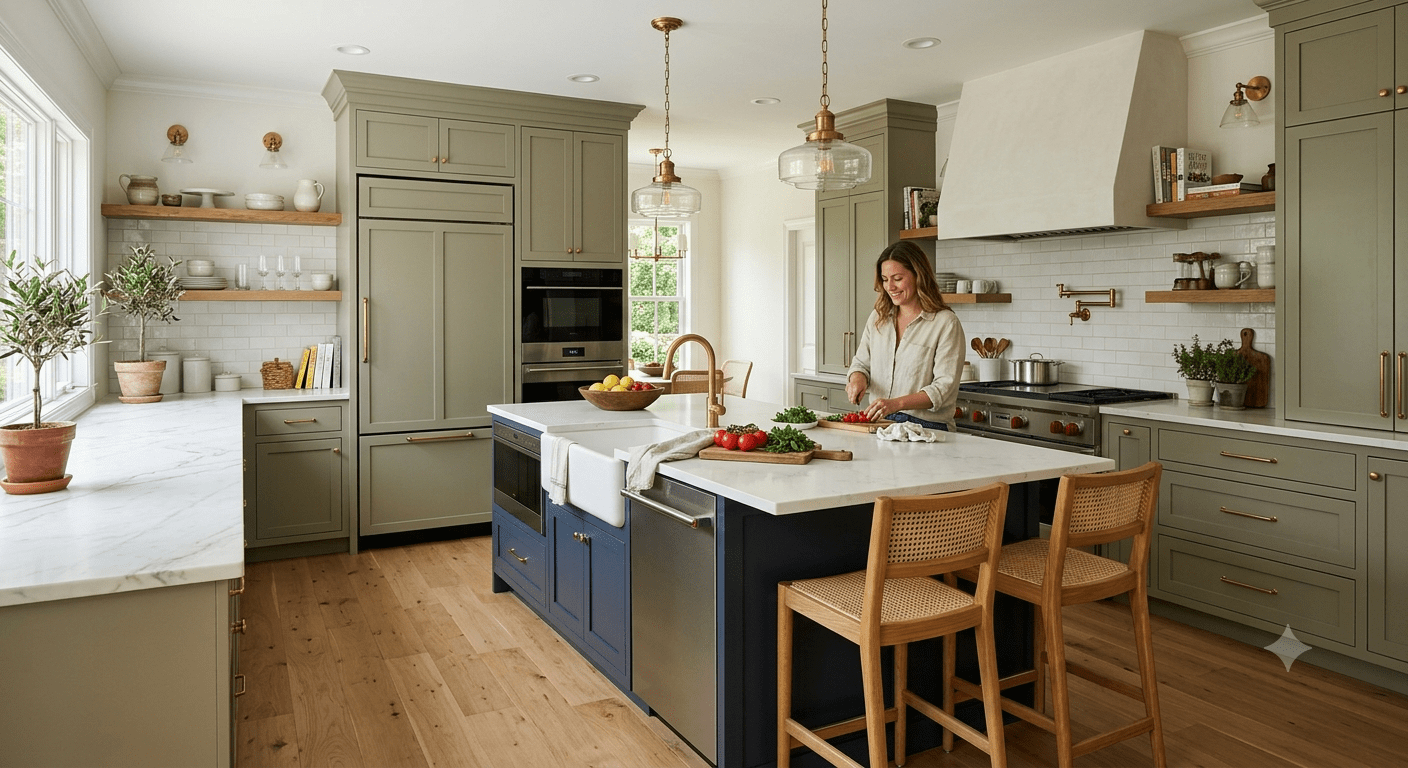
The style typically includes shaker cabinets in a warm white or soft neutral tone, an apron front sink, open or glass front shelving in limited amounts and natural materials like butcher block or wood accents mixed with quartz countertops. Black or matte bronze hardware is a common finishing touch that keeps the style from feeling overly rustic.
Shaker Traditional Kitchens
Shaker style cabinetry, defined by its flat recessed panel doors and minimal detailing, remains one of the most requested cabinet profiles regardless of overall kitchen style. It works as a standalone traditional look or as the base for a transitional kitchen, which is part of why it continues to dominate cabinet sales nationally.
Why Shaker Traditional Suits Older Kent Homes
Homes built before the 1970s near downtown Kent, along with the area’s smaller pocket of Colonial and Victorian influenced properties, tend to carry architectural details that pair naturally with shaker cabinetry. A more ornate or heavily modern cabinet style can clash with original trim work and window details in these homes, while shaker cabinetry sits comfortably alongside them.
Where Shaker Traditional Works Best
This style performs well in kitchens that are not being expanded or reconfigured, since it relies on classic proportions rather than dramatic layout changes. It is a strong choice for a full remodel that keeps the existing footprint, which is one of the more common project types in Kent’s older housing stock.
Contemporary and Modern Minimalist Kitchens
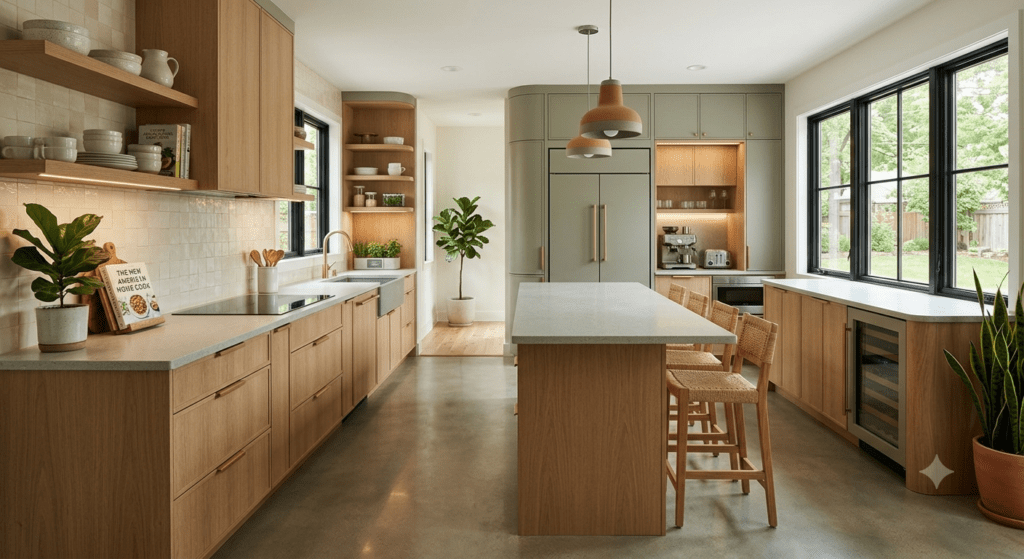
Contemporary and modern minimalist kitchens use flat slab cabinet doors, integrated appliances and a reduced material palette to create a streamlined look. The NKBA’s 2026 report found 60 percent of respondents expect contemporary and modern minimalism to remain popular over the next three years and slab cabinet doors specifically were identified by 69 percent as a growing preference.
Why Contemporary Fits Newer Kent Construction
Kent has a meaningful share of newer housing, with roughly 21 percent of the city’s housing stock built in 2000 or later, much of it concentrated in East Hill’s master planned communities. These homes typically have larger, more open kitchen footprints already built for an island centered layout, which is where a contemporary or modern minimalist style tends to look most intentional rather than out of place.
What a Contemporary Kitchen Includes
Typical elements include flat panel cabinets without visible hardware or with minimal integrated pulls, waterfall edge countertops, panel ready refrigeration and dishwashers and a limited, tightly controlled color palette. This style tends to cost more per square foot than transitional or shaker options, since slab cabinetry and panel ready appliances carry a higher price point than stock alternatives.
Kitchen Styles Compared
| Style | Best fit home type | Cabinet profile | Typical cost tier |
| Transitional | Any age, most versatile | Shaker or beadboard | Mid-range |
| Modern farmhouse | Ramblers, split levels | Shaker, warm white | Mid-range |
| Shaker traditional | Older homes, downtown Kent | Shaker | Low to mid-range |
| Contemporary/modern | Newer East Hill construction | Flat slab | Mid to high |
Matching Style to Kent’s Housing Stock
Single family detached homes make up just over half of Kent’s housing units and the majority of those were built during the suburban expansion of the 1970s through the 1990s. This means most kitchen remodels in Kent are working within an existing rambler or split level footprint rather than a wide open new construction layout.
East Hill and Scenic Hill
These hilltop neighborhoods carry the densest concentration of ramblers and split level homes in the city. Transitional and modern farmhouse styles tend to perform best here, since both styles work comfortably within a traditional kitchen footprint without requiring major structural changes.
West Hill and Mill Creek
Older single family stock, including ramblers and split levels from Kent’s earlier suburban years, dominates these neighborhoods. Shaker traditional and modern farmhouse styles both suit this housing type well, particularly in homes that have not been updated since original construction.
Downtown Kent and Historic Pockets
A smaller number of Colonial and Victorian influenced homes sit closer to downtown Kent. Shaker traditional cabinetry tends to pair most naturally with the architectural detail found in these older properties.
Newer East Hill Developments
Kent’s newer master planned communities, which make up a meaningful share of the city’s more recent construction, typically feature larger, more open kitchen layouts. Contemporary and modern minimalist styles tend to suit these homes best, since the floor plans were designed with an open, island centered kitchen in mind from the start.
Choosing the Right Style for Your Kitchen Remodel in Kent
Start by looking at your home’s age and existing architectural detail rather than starting from a design trend. A kitchen remodel in Kent that fights against the rest of the home’s character, such as a stark modern minimalist kitchen dropped into a Colonial style property near downtown, tends to feel disconnected rather than intentional, even when each individual finish is well chosen.
Next, consider your kitchen’s current footprint. Transitional and shaker traditional styles both work well within an existing layout, which keeps a kitchen remodel in Kent closer to the mid-range cost tier. Contemporary and modern minimalist styles often look best paired with a more open layout, which may mean additional cost if your current kitchen is enclosed or compartmentalized.
Finally, think about how long you plan to stay in the home. Transitional design carries the broadest, most durable appeal across buyers and years, which makes it a reasonable default if you are not fully committed to a stronger stylistic direction. A more distinct style like modern farmhouse or contemporary works well if you plan to enjoy the space for years to come and are choosing based on how you want to live in the kitchen rather than how the next buyer might see it.
Common Questions
What is the most popular kitchen style right now?
Transitional is currently the most popular kitchen style nationally, chosen by roughly a quarter of renovating homeowners in recent industry surveys and expected to remain the leading style over the next several years.
Does farmhouse style still work for a kitchen remodel in Kent?
Yes, though national farmhouse demand has declined somewhat in recent years. It remains a strong fit specifically for Kent’s ramblers and split level homes, where the casual, warm aesthetic matches the existing layout and architecture well.
What cabinet style works in almost any Kent home?
Shaker cabinetry is the most versatile option, since it forms the base of transitional, modern farmhouse and traditional kitchen styles alike. It works in both older homes near downtown Kent and newer construction on East Hill.
Is a contemporary kitchen a good fit for an older Kent rambler?
It can work, but it typically requires opening up the existing floor plan to feel intentional rather than out of place. Homeowners in older ramblers who want a contemporary look often pair the style with a layout change rather than dropping it into the home’s original compartmentalized kitchen.
How much does kitchen style affect the overall cost of a remodel?
Style affects cost mainly through cabinet type and material choice. Transitional and shaker traditional styles generally use stock or semi-custom cabinetry, which keeps costs in the mid-range, while contemporary and modern minimalist styles often rely on slab cabinetry and panel ready appliances that push costs higher.
Should I choose a kitchen style based on resale value or personal preference?
Transitional design offers the broadest resale appeal if that is your main priority. If you plan to stay in your Kent home long term, choosing a style based on how you actually want to use and enjoy the kitchen day to day is a reasonable approach, even if it leans more toward a distinct style like modern farmhouse or contemporary.