Tile vs. Vinyl Flooring for Bathroom Remodels: Pros and Cons
Choosing between tile and vinyl is one of the first decisions in any bathroom remodel, and it affects your budget, maintenance routine, and how the room performs for years afterward. Both are solid bathroom flooring options, but they serve different priorities. This guide breaks down how tile and vinyl compare on cost, water resistance, durability, comfort, and resale value so you can pick the right one for your space.
Table of Contents
- What Are the Main Bathroom Flooring Options?
- Tile Flooring for Bathrooms
- Vinyl Flooring for Bathrooms
- Tile vs. Vinyl Comparison Table
- Durability and Lifespan
- Water Resistance and Slip Safety
- Maintenance Requirements
- Resale Value Considerations
- Which Bathroom Flooring Option Is Right for You?
- Common Questions
What Are the Main Bathroom Flooring Options?
Tile and vinyl are the two most common bathroom flooring options, and they cover the vast majority of remodels. Tile includes ceramic, porcelain, and natural stone, while vinyl includes sheet vinyl, luxury vinyl tile, and luxury vinyl plank. Other materials like cork and waterproof laminate exist but make up a small share of bathroom installations, mainly because they need more maintenance to stay water resistant over time.
Tile has been the standard bathroom flooring option for decades because of its water resistance and durability. Vinyl has grown quickly in recent years as manufacturers improved its waterproofing and its ability to mimic the look of stone or wood. The choice between them usually comes down to budget, how long you plan to stay in the home, and how much upkeep you want to deal with.
Tile Flooring for Bathrooms
Tile is a fired ceramic or stone material installed with mortar and grout. It has been used in bathrooms longer than any other flooring option, and it remains the default choice for homeowners prioritizing durability and design flexibility.
Types of Tile
Ceramic tile is the most affordable tile option and works well in low to moderate traffic bathrooms. Porcelain tile is denser and less porous than ceramic, which makes it more resistant to water absorption and better suited to bathroom floors that see daily use. Natural stone tile, including marble, travertine, and slate, offers a premium look but requires more sealing and care than ceramic or porcelain.
Water Resistance and Slip Safety
Tile itself resists water well, but the grout lines between tiles are more porous and need to be sealed to stay water resistant. Unsealed or poorly maintained grout can absorb moisture over time, which leads to staining or, in worse cases, mold underneath the tile.
Slip resistance is measured using a rating called DCOF, or dynamic coefficient of friction, under the ANSI A326.3 testing standard. Tile intended for a wet, level indoor floor should have a DCOF of 0.42 or higher, and tile manufacturers list this number on product specifications. For a bathroom floor, a matte or textured finish with a DCOF at or above that threshold provides safer footing than a polished, high gloss tile, especially for a floor that gets wet regularly.
Cost of Tile Flooring
Tile flooring for a bathroom typically costs between 12 and 50 dollars per square foot installed as of 2026, with the wide range driven by material choice. Basic ceramic tile sits at the lower end of that range, while porcelain and natural stone push toward the higher end. Installation labor adds significantly to the total cost, since tile setting requires skilled labor, mortar, and grout work that takes longer than installing a floating floor.
Vinyl Flooring for Bathrooms
Vinyl flooring is a synthetic material designed to resist water while offering a softer, warmer feel underfoot than tile. Modern vinyl has closed much of the performance gap with tile, particularly in waterproofing, which is why it has become a common bathroom flooring option over the past several years.
Types of Vinyl
Sheet vinyl comes in large rolls and creates a continuous, seamless surface with minimal seams for water to get through, which makes it a strong choice for a full bathroom floor. Luxury vinyl tile and luxury vinyl plank are installed in individual pieces, often with a click lock edge, and are designed to closely mimic the look of stone or wood. Luxury vinyl with a rigid core, sometimes labeled SPC, holds up better to daily wear than older, thinner vinyl products.
Water Resistance and Comfort
Quality luxury vinyl is fully waterproof, not just water resistant, which makes it well suited to a bathroom floor. Because vinyl has fewer seams than tile and no grout lines, there are fewer points where water can get underneath the surface. Vinyl is also noticeably softer and warmer underfoot than tile, which matters for anyone standing at a sink or getting out of a shower on a cold morning.
One limitation of vinyl is its response to heat. Vinyl can warp or soften under high temperatures, which makes it a poor match for a bathroom with radiant floor heating, an increasingly popular upgrade in primary bathroom remodels. Tile has no such limitation and is a better choice for a floor that includes radiant heat.
Cost of Vinyl Flooring
Vinyl flooring typically costs between 3 and 12 dollars per square foot installed as of 2026, making it two to four times cheaper than tile for the same square footage. Sheet vinyl sits at the more affordable end of that range, while premium luxury vinyl plank with a thicker wear layer costs more but still comes in well under most tile options.
Tile vs. Vinyl Comparison Table
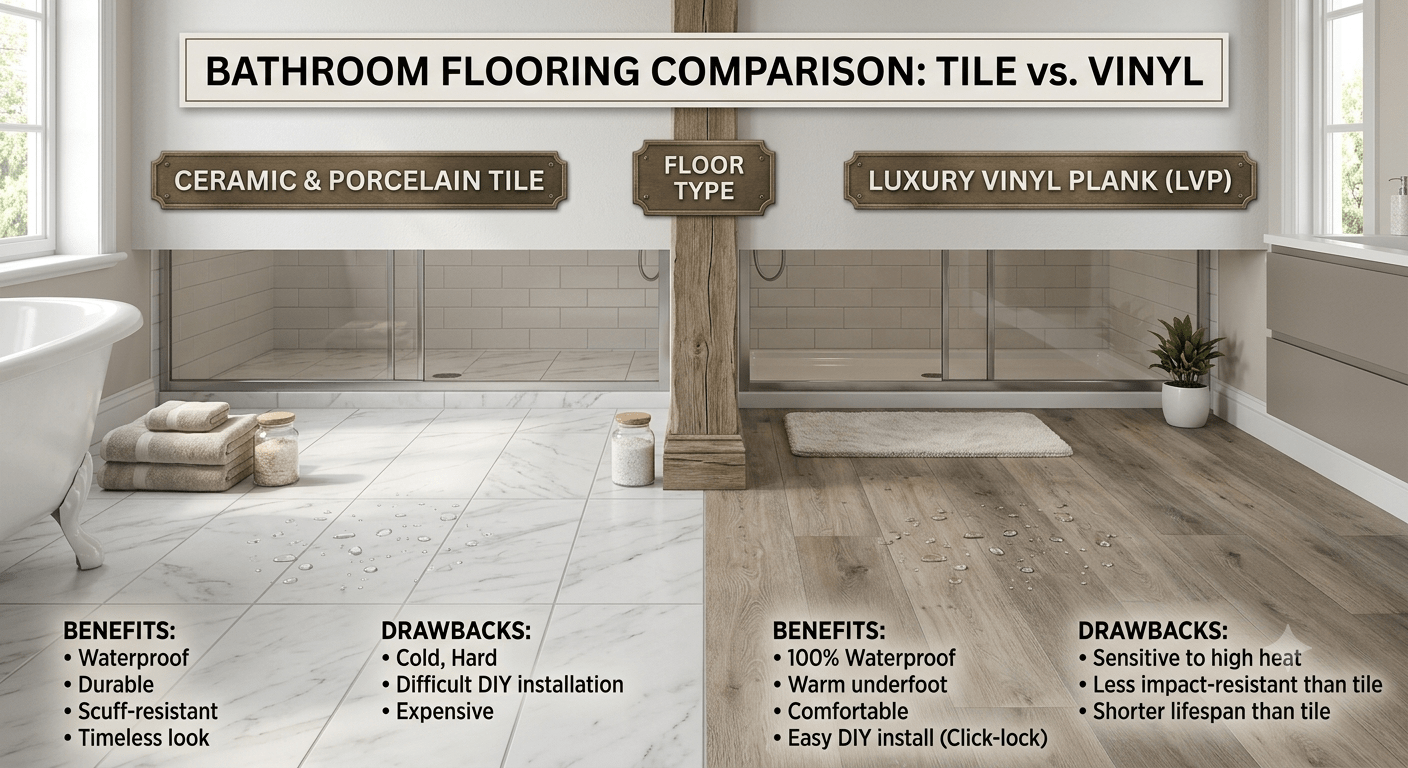
| Factor | Tile | Vinyl |
| Cost per sq ft installed | $12–$50 | $3–$12 |
| Lifespan | 25–50 years | 10–20 years |
| Water resistance | Very high, grout needs sealing | Fully waterproof when quality installed |
| Comfort underfoot | Hard, cold | Soft, warm |
| Radiant heat compatible | Yes | No, can warp |
| DIY installation | Difficult, needs skilled labor | Easier, click lock options available |
| Resale value impact | Higher | Moderate |
Durability and Lifespan
Tile is the more durable of the two options over a long time horizon. A well installed tile floor typically lasts 25 to 50 years, and it resists scratches, dents, and everyday wear far better than vinyl. Porcelain in particular is dense enough to handle heavy foot traffic without showing damage for decades.
Vinyl generally lasts 10 to 20 years, and its lifespan depends heavily on quality. A budget vinyl product with a thin wear layer will show scratches and dents within a few years, especially in a household with kids or pets. A premium luxury vinyl plank with a thicker wear layer and a rigid core holds up considerably better, though it still will not match tile’s long term durability. Over a 30 year period in the same home, a homeowner might replace vinyl flooring twice, which narrows the total cost gap between the two materials more than the upfront price suggests.
Maintenance Requirements
Tile requires more ongoing maintenance than vinyl, mainly because of the grout. Grout should be resealed roughly every one to three years to keep it water resistant, and without that maintenance, grout lines can stain or allow moisture through to the subfloor. Beyond sealing, tile is easy to clean and does not require anything beyond regular sweeping and mopping.
Vinyl needs very little maintenance. There is no grout to reseal, and cleaning is limited to sweeping and damp mopping. Seams in sheet vinyl or between vinyl planks occasionally need resealing, but this is a minor and infrequent task compared to tile grout upkeep.
Resale Value Considerations
Tile generally adds more resale value than vinyl, particularly in a primary or full bathroom where buyers expect a higher quality finish. Porcelain and natural stone tile signal a higher end remodel to a buyer walking through the home, which can support a stronger asking price relative to comparable homes with vinyl flooring.
That said, quality luxury vinyl plank still delivers a solid return, generally recouping 70 to 80 percent of its installed cost at resale according to industry cost data. This makes vinyl a reasonable choice in a secondary bathroom or a rental property, where the goal is a clean, waterproof floor rather than a showcase feature. The gap in resale impact matters most in a primary bathroom, where buyers tend to scrutinize material quality more closely than they do in a guest bath or powder room.
Which Bathroom Flooring Option Is Right for You?
The right choice comes down to three questions: how long you plan to stay in the home, your budget, and whether the bathroom will include radiant floor heat.
If you plan to stay in your home for many years and want a floor that will not need replacing, tile is the stronger long term investment despite its higher upfront cost. If you are working with a tighter budget or planning a shorter term stay, vinyl delivers strong water resistance and comfort at a fraction of the price, with the tradeoff being a shorter lifespan. If radiant floor heat is part of your bathroom plan, tile is the only practical option, since vinyl is not built to handle that kind of sustained heat.
For most primary bathrooms, tile remains the more common choice among bathroom flooring options because of its durability and resale impact. For secondary bathrooms, powder rooms, or budget conscious remodels, vinyl offers a waterproof, low maintenance floor that performs well without the higher price tag of tile.
Common Questions
Is vinyl flooring actually waterproof in a bathroom?
Quality luxury vinyl tile and luxury vinyl plank are fully waterproof when properly installed, which makes them suitable for bathroom floors. Lower quality or older vinyl products may only be water resistant rather than fully waterproof, so checking the product specification matters before installation.
Does tile flooring need to be resealed regularly?
The grout between tiles needs resealing roughly every one to three years to stay water resistant, while the tile itself, especially porcelain, requires little to no sealing. Natural stone tile typically needs more frequent sealing than ceramic or porcelain.
Can vinyl flooring be installed over existing tile?
Yes, vinyl plank flooring can be installed over existing tile if the tile is flat, in good condition, and firmly attached to the subfloor. Deep grout lines usually need to be filled first to create a level surface, since an uneven base can cause vinyl planks to shift or wear unevenly.
Which is safer for a bathroom floor, tile or vinyl?
Both can be safe if chosen correctly. Tile should have a DCOF rating of 0.42 or higher for a wet indoor floor, with a matte or textured finish providing better grip than a polished surface. Vinyl generally offers more consistent traction across its surface since it has no grout lines or glossy glaze to worry about.
Is tile or vinyl a better long term investment?
Tile typically offers a better long term value if you plan to stay in your home for decades, since it lasts two to three times longer than vinyl and adds more to resale value. Vinyl is the more cost effective choice for shorter term ownership or secondary bathrooms where a lower upfront cost matters more than maximum lifespan.
Can I put radiant floor heating under vinyl flooring?
Radiant floor heat is not recommended under most vinyl flooring, since sustained heat can cause the material to warp or soften over time. Tile is the standard choice for a bathroom floor that includes radiant heating.