How Much Does a Kitchen Remodel Cost in Kirkland, WA?
Budgeting a kitchen remodel in Kirkland is difficult because the same-looking project can cost very different amounts depending on three decisions: how much of the kitchen you change, how high the finish level is, and who does the work. Eastside labor rates, city permit requirements, and the age of the house all add costs that do not appear on a cabinet or countertop quote, which is why national averages rarely match what Kirkland homeowners actually pay.
Consider a 1980s Kirkland home with dated oak cabinets and a wall separating the kitchen from the dining room. Replacing the cabinets and counters is one project. Removing that wall to open the space is a different one, with engineering, permits, and possibly wiring or plumbing surprises once the drywall comes off. Both are called a kitchen remodel, but they sit in different cost tiers.
This article explains the 2026 cost ranges for Kirkland and the wider Seattle and Eastside market, how scope tiers differ, what per-square-foot figures can and cannot tell you, where the money goes by category, and which factors move totals. It also covers permits, hidden conditions in older homes, IKEA versus custom cabinetry, resale value, and practical ways to keep a budget under control.
How Much Does a Kitchen Remodel Cost in Kirkland in 2026?
A Kirkland kitchen remodel in 2026 typically costs about $30,000 to $80,000 for a cosmetic-only project and $80,000 to $180,000 for a full structural remodel, with typical overall ranges running from $180,000 to $300,000 or more for larger or luxury projects.
The wide spread comes from scope. A cosmetic project replaces cabinets, counters, and appliances without moving walls or structure, and needs no permit. A structural project removes walls and converts the kitchen to an open-concept layout, which requires a permit and adds engineering and construction work. The upper end of the Kirkland range is tied to waterfront or luxury properties with high-end materials.
| Tier | Typical scope | Estimated cost range (2026) |
|---|---|---|
| Cosmetic-only | New cabinets, counters, and appliances; no wall moves or structural work; no permit | $30,000 to $80,000 |
| Cosmetic plus MEP changes | New layout or sink relocation; BT trade permits required | $60,000 to $120,000 |
| Full structural remodel | Wall removal and open-concept conversion; permit required | $80,000 to $180,000 |
| Typical overall range | Broad scope; upper end for waterfront or luxury homes with high-end materials | $180,000 to $300,000+ |
These figures are contractor costs and generally exclude soft costs such as architect fees, structural engineering, and permits. They are estimates, and the tiers overlap because finish level matters as much as layout. Figures for the broader Seattle and Eastside market can differ from Kirkland-specific ones, so compare like for like. Setting aside a contingency on top of the tier total protects the budget if conditions change once work starts. For a size-based view, see the per-square-foot section below.
Kitchen Remodel Costs by Project Scope
Project scope is the biggest driver of remodel cost: a cosmetic refresh keeps walls, plumbing, and layout in place, while layout changes add engineering review, permits, and labor. Cabinets are often the single largest line item in any tier.
Adding mechanical, electrical, and plumbing (MEP) changes, such as a new layout or relocated sink, brings a Kirkland project to roughly $60,000 to $120,000 in contractor costs, and these changes require BT trade permits. In Seattle, opening walls, relocating islands, or reconfiguring work zones typically adds $20,000 to $60,000 or more on top of the base remodel, because structural modifications require engineering, permits, and careful execution.
Cosmetic Refresh
A cosmetic refresh falls in the $30,000 to $80,000 range in Kirkland when it includes new cabinets, counters, and appliances, and it can cost far less when limited to paint, hardware, backsplash, lighting, and a new faucet. Layout and appliance positions stay the same.
Several items stay permit-free: replacing cabinet doors without moving cabinets, installing new countertops on existing bases, swapping same-size appliances, painting, and laying new flooring over the existing subfloor. Painting existing cabinetry is the least expensive route; a 2017 Kirkland 98033-area price range was about $2.81 to $7.17 per square foot, which is dated and will be higher today.
Mid-Range Remodel
A mid-range remodel in Seattle typically runs about $160,000 to $200,000 and is defined by keeping the same footprint while upgrading what fills it. It usually includes layout improvements, higher-quality cabinetry, upgraded appliances, and new flooring.
Typical choices are semi-custom or IKEA cabinetry paired with quartz countertops and mid-grade appliances. Kirkland homeowners should treat this Seattle range as a reference point, since local contractor pricing and the size of the kitchen will shift the total.
Full or High-End Remodel
A full remodel that reworks most or all elements typically costs about $160,000 to $250,000 or more in Seattle, while a high-end remodel generally starts around $225,000 and can exceed $250,000.
Costs escalate for specific reasons. Structural work adds engineering, beams, and posts when a load-bearing wall is removed. Custom cabinetry and premium appliances push totals toward the upper end, as do stone surfaces and plumbing or electrical upgrades. Architect involvement is typical whenever walls, plumbing, or structure change, because those changes need drawings and engineering for permits.
Kitchen Remodel Cost per Square Foot in Kirkland
Kitchen remodels in Seattle and the Eastside are expected to cost about $700 to $1,200 per square foot in 2026, depending on finishes and scope. To estimate a total, multiply the kitchen’s square footage by that range.
The upper end applies to older homes, custom cabinetry, and high-end appliances. Treat the figure as a rough guide rather than a quote, because cabinet frontage and appliances drive cost more than floor area. Two kitchens of the same size can differ sharply if one has a long run of custom cabinets and professional-grade appliances while the other has a compact layout with standard units. Open-concept conversions also change the calculation, since the cost of structural work does not scale with floor area.
| Kitchen size | Estimated total |
|---|---|
| 150 sq. ft. | $105,000 to $180,000 |
| 250 sq. ft. | $175,000 to $300,000 |
Cost Breakdown: Where the Money Goes
Cabinetry is typically the largest single investment in a Kirkland kitchen remodel, followed by appliances, labor, and surfaces such as countertops and flooring. Plumbing and electrical relocation add both labor and permit costs.
In Seattle, cabinetry commonly runs $45,000 to $90,000 or more and appliance upgrades $25,000 to $50,000 or more. These figures overlap with total project ranges, so they represent the upper tiers rather than a share of every budget. The sections below take the main categories in turn, starting with the biggest.
Cabinetry and Millwork
Cabinetry and millwork usually form the largest line item, with custom or semi-custom cabinetry in Seattle typically costing $45,000 to $90,000 or more, especially when built-in features are added.
Cabinet types differ in fit and price. Stock cabinets come in fixed sizes and are the least expensive. Semi-custom cabinets offer more size and finish options. Fully custom cabinets are built to the room and carry the highest cost. IKEA’s SEKTION system is a modular option that fits many layouts at a lower starting cost. The main cost driver is linear feet of cabinet frontage, so shortening a run or trimming upper cabinets reduces cost directly. Custom fabrication and specialized finishes raise totals, and modified IKEA cabinets can receive custom trim to look built-in.
Countertops
Countertop cost depends on material, and installed prices are quoted per square foot of surface, including fabrication, seaming, and installation labor. Surface area generally follows base cabinet frontage, so longer cabinet runs and islands increase the total.
Dated 2017 pricing in the Kirkland 98033 area, from economy to better tiers, illustrates the relative gaps; current prices are higher:
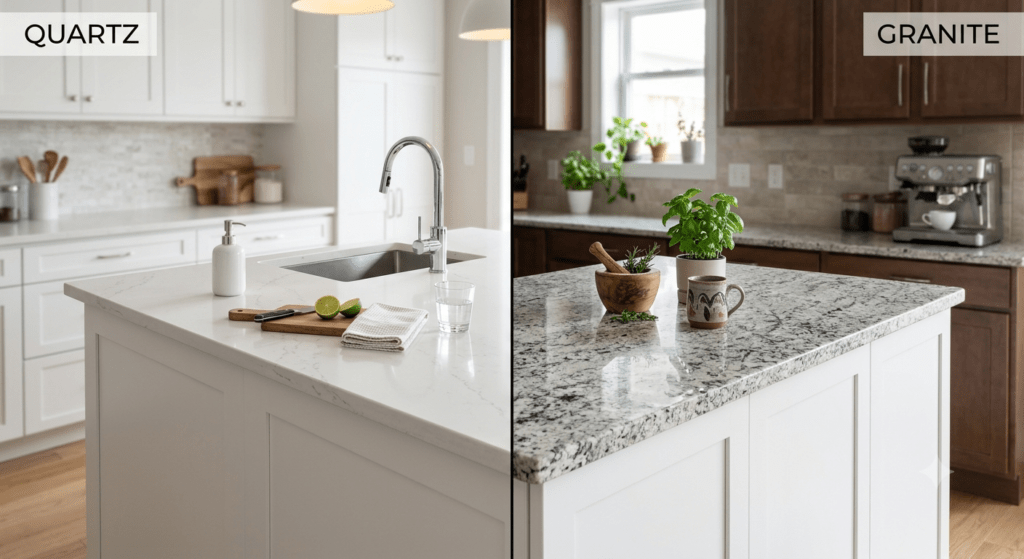
- Quartz: $76.44 to $103 per square foot
- Granite: $60.07 to $90.11 per square foot
- Laminate: $26.07 to $47.11 per square foot
Butcher block and stone composites fall at different points, and natural stone or porcelain slabs need precise fabrication, which raises installation cost.
Appliances
Appliance packages vary most between standard and premium. Upgrades in Seattle typically run $25,000 to $50,000 or more, depending on brand, size, and technology, with professional-grade or panel-ready units at the high end.
Built-in refrigeration and induction cooktops sit at the higher end, and built-in units add installation complexity. Gas lines and range hood ventilation work can trigger additional inspections, which add cost beyond the appliance price.
Labor and Installation
Skilled labor in Seattle typically costs about $75 to $95 per hour, and specialty trades such as electricians and plumbers charge more. Eastside rates run above national averages, which is a large part of why local totals exceed national figures.
Installation involves demolition and disposal, carpentry, plumbing, electrical, and finishing, and labor grows with relocation and layout complexity. A licensed remodeling contractor coordinates these trades, which improves quality control and turnaround for many homeowners compared with managing each trade separately.
Plumbing, Electrical, Flooring and Finishes
Relocating a sink or adding island outlets expands plumbing and electrical scope, and older homes may need a service panel upgrade to handle modern appliance loads. Lighting and backsplash are commonly updated at the same time.
Dated 2017 Kirkland 98033-area unit costs show the structure of pricing, though today’s figures are higher:
- Recessed lighting: $231 to $342 per fixture, including fixture, connectors, bulbs, and labor
- Hardwood flooring: $7.75 to $12.39 per square foot, including underlayment, adhesives, and labor
Floor leveling and subfloor repairs are billed separately, and are among the items that surface once demolition begins.
Key Factors That Influence Your Kirkland Kitchen Remodel Cost
The factors that move a Kirkland remodel total most are layout changes and kitchen footprint, finish and material level, and the age and concealed condition of the home. Contractor selection and market timing also affect the final price.
Layout and footprint. Keeping fixtures where they are keeps costs lowest. Moving the sink, relocating an island, or expanding the footprint brings in engineering, permits, and extra labor, and these changes shift totals more than finish choices alone.
Finish and material level. Finish decisions compound across categories. A higher-end cabinet line usually brings stone counters, premium hardware, and better appliances, because the surfaces and fittings are chosen to match.
Home age and existing conditions. Houses with older wiring, plumbing, or framing are more likely to need corrective work, and these conditions often appear only after walls are opened.
Contractor and timing. Bids vary with scheduling, trade availability, and how thoroughly each contractor itemizes the work. Comparing bids on identical scope is the clearest way to see real price differences.
Permits and Structural Changes: When Costs Increase in Kirkland
A Kirkland kitchen remodel needs a permit when you remove any wall, even a non-load-bearing one, or change plumbing, electrical, or layout. Cosmetic work with no wall or system changes usually does not.
| No permit typically needed | Permit required |
|---|---|
| Painting | Removing any wall |
| Replacing cabinet doors without moving cabinets | Relocating a sink or other plumbing |
| New counters on existing bases | New or relocated electrical circuits |
| Same-size appliance replacement | Open-concept conversion |
| New flooring over existing subfloor | Gas line or ventilation changes |
Kirkland distinguishes between BT and BR permits. BT permits cover trade work such as plumbing and electrical changes, while BR permits cover structural and layout changes. A remodel that moves the sink and rewires the kitchen needs BT permits, while one that removes a wall needs a BR permit, with inspections at the relevant stages by the City of Kirkland Building Services.
Structural projects carry soft costs of about $15,000 to $35,000 for architect fees, structural engineering, and permits, and these are not included in the tier ranges above. Open-concept conversions drive much of this expense because a wall that appears non-structural may carry roof or floor loads. An engineer determines whether a beam and posts are needed, and those add material and labor cost.
An architect adds what a kitchen designer cannot: permit documents and structural analysis. Designers handle layouts, finishes, and cabinetry, but they do not prepare permit drawings or perform structural engineering. When walls, plumbing, or structure change, an architect coordinates the permit package, engineering, and code compliance.
Older Kirkland Homes: Hidden Costs When Walls Open Up
Older Kirkland homes often reveal outdated wiring, piping, materials, and framing once walls and floors are opened, and each one can add cost before new work begins. Planning for these conditions is part of budgeting for any remodel in an older house.
- Knob-and-tube wiring: may need remediation before new circuits are added, adding electrician labor and inspection work.
- Corroded galvanized supply piping: may need replacement before new fixtures are connected, which increases plumbing scope.
- Undersized electrical service: modern appliances can require a panel upgrade.
- Asbestos in floor adhesive or wall texture: needs abatement before demolition, which adds a specialist cost and schedule time.
- Non-standard framing and subfloor damage: requires repairs before cabinets and flooring can be installed level.
Because these issues are often invisible until demolition, a contingency of 10 to 20 percent of the project budget is a practical safeguard. If nothing is found, that money stays unspent; if something is, it prevents a mid-project funding gap and rushed decisions about finishes.
IKEA vs. Custom Kitchen: Which Fits Your Budget?
An IKEA kitchen usually costs less than a custom kitchen, but the gap narrows once professional installation and modifications are added. IKEA’s modular SEKTION cabinets fit many layouts at a lower starting cost, while custom cabinetry is built to your exact room and specifications.
Some Kirkland homeowners choose IKEA to control the largest line item in the budget and spend the savings on counters or appliances. Custom cabinetry, by contrast, handles unusual dimensions, specialized finishes, and built-in features without compromises, and in Seattle custom or semi-custom cabinetry commonly costs $45,000 to $90,000 or more. A local contractor can add custom trim and molding to modified IKEA cabinets to make them look more bespoke.
| Factor | IKEA cabinetry | Custom cabinetry |
|---|---|---|
| Starting cost | Lower | Higher |
| Customization | Modular sizes; trim can be added | Built to the room and specification |
| Installation | Professional installation adds cost | Fabrication and installation add cost |
| Best fit | Standard layouts and tighter budgets | Unusual spaces and specialized finishes |
Does a Kitchen Remodel Increase Home Value in Kirkland?
A kitchen remodel can increase home value in Kirkland, but the return depends on the scope, quality, and how well the finishes match the neighborhood. Kitchens are among the spaces that most influence buyers in competitive markets, so dated kitchens can weigh on a sale price.
Returns are rarely a full dollar-for-dollar recovery, and spending far above neighborhood values is the most common way to lose money. A high-end remodel in a modestly priced area may not recover its cost, while a cosmetic refresh in a house with a dated kitchen can improve appeal at lower expense. Daily livability, better layout, storage, and lighting also give value beyond resale.
How to Budget and Save on Your Kitchen Remodel
To budget a kitchen remodel, define the scope first, choose a target tier, add a contingency, and collect itemized bids so you can compare exactly what each includes.
- Keep the existing layout: avoiding plumbing and wall moves removes engineering, permit, and labor costs.
- Reface cabinets: replacing doors on sound cabinet boxes costs less than full replacement and needs no permit.
- Spend where it counts: put money into cabinetry quality and layout, and economize on items that are easy to replace later.
- Consider IKEA or semi-custom cabinets: reducing cabinet frontage and choosing modular systems cuts the largest line item.
- Hold a contingency: 10 to 20 percent is sensible for older homes.
- Get several itemized bids: this shows which scope items are missing or priced differently.
- Phase non-urgent work: upgrades such as lighting or backsplash can follow the main project.
Choose a local Kirkland contractor who knows the city’s permit process and inspections. Before hiring, verify the contractor’s license status and complaint history with Washington State and confirm that the bid names the permits it covers.
Frequently Asked Questions
Do I need a permit to replace cabinets in Kirkland?
Replacing cabinet doors or swapping cabinets without moving them, along with new counters on existing bases, usually does not need a permit. Moving cabinets that involve plumbing, electrical, or wall changes does.
Do I need an architect for a kitchen remodel?
Cosmetic-only remodels usually need no architect or permit. An architect helps when walls, plumbing, or structure change, by coordinating permit documents, engineering, and code compliance.
Is a load-bearing wall common between a kitchen and dining area?
Yes, in many split-level homes a load-bearing wall separates the kitchen from the dining area. A structural engineer must confirm this before any removal.
Is it cheaper to remodel in nearby cities?
Costs across Seattle and the Eastside are broadly similar because of shared labor markets. Differences come mainly from scope, finishes, and home condition rather than city alone.
Can I live in the house during a kitchen remodel?
Many homeowners do, using a temporary kitchen setup elsewhere in the house. Water and power shutoffs, dust, and demolition make it harder during larger projects.